We chose Ecole
Tsvetlin, father of Yasna, the first student in the School Immersion Program, shares his perspective on their time at the Ecole. The experience stayed with him and led him to write the reflection below.
When the whole family headed to watch that movie, nobody thought that in a few months my daughter and I would fly from Bulgaria, spend four days at Ecole, and conclude that this is the best school we could find for her, so we are all moving to Hasliberg.
In April 2025 we watched a documentary where a young (and apparently famous) composer mentioned that when she was a kid she was taught composition and improvisation by some method called partimenti. Curious about it (most of us play music, and, according to astrology, we are three Aquarians and a Libra — all air signs), a few days later we applied for the Partimenti Summer Academy in Basel. When we arrived there in July, we were already looking for a high school for our 13-year-old daughter. We asked around and looked at some schools … but we didn’t find anything that significantly differs from the schools in Bulgaria.
Online research
A few weeks later, ChatGPT replied to our question about “democratic and alternative schools that prioritize trust, self-directed learning, and respect for children's autonomy.” And that’s how we found Ecole d’Humanité. The more we looked at the website, the more we liked it. The first impression I got was that there was an active community – students come back and become teachers, alumni are active on the internet, and there are regular gatherings. It seems there must be something attractive about it.
The most impressive thing from our online research was the promotional film from 2004 (Ecole d'Humanité - 2004). It looked natural, and while watching it, it seemed that the teachers liked being and working there. There were a few teachers who were teaching several disciplines simultaneously, e.g. chemistry, biology, basketball, and chess. It was a clear sign of open-minded teachers – the kind we were looking for.

From the Ecole’s promotional film (2004). Title and role shown are those at the time of filming.
What stood out even more was the video description: All the music heard in the video was composed and performed by teachers and students at the Ecole d'Humanité between 1999 and 2004. It felt like students and teachers were doing meaningful activities (playing and composing together) so that they could share the results (beautiful melodies). This is the learning style we are looking for.
Naturally, the question remained: how do we know that what we see on the internet is (still) true? First, let’s ask all our Swiss friends, and second, let’s go there and see it.
Tobias from Basel, the organizer of the music academy that initiated our journey, happened to know Ms. Gertrud Liebrich. Ms. Liebrich had been teaching history at Ecole in the 70s. The last time she visited the school was two years ago. Talking with her on the phone, I could hear how much she appreciated the time spent there, especially the six-day hikes. Once again, she confirmed what distinguishes Ecole from the rest – the strong community feeling of belonging, supporting, and caring.
Four days at Ecole
The next step was going to Ecole for a four-day immersion program. We were prepared to take as much as we could from our stay, but we didn’t expect that much. It was so intense that we didn’t get much time to take pictures. It will be hard to describe here in detail all the joy we had around the Christmas market and the Samichlaus party with their nice and naughty lists, the folk dancing, the baking, the singing and playing, and the math, social science, and French classes we took (yes, I was allowed to take part in most of the activities, even in a math class). That’s why I’ll just include the small poem we did on our third day and a few photos.
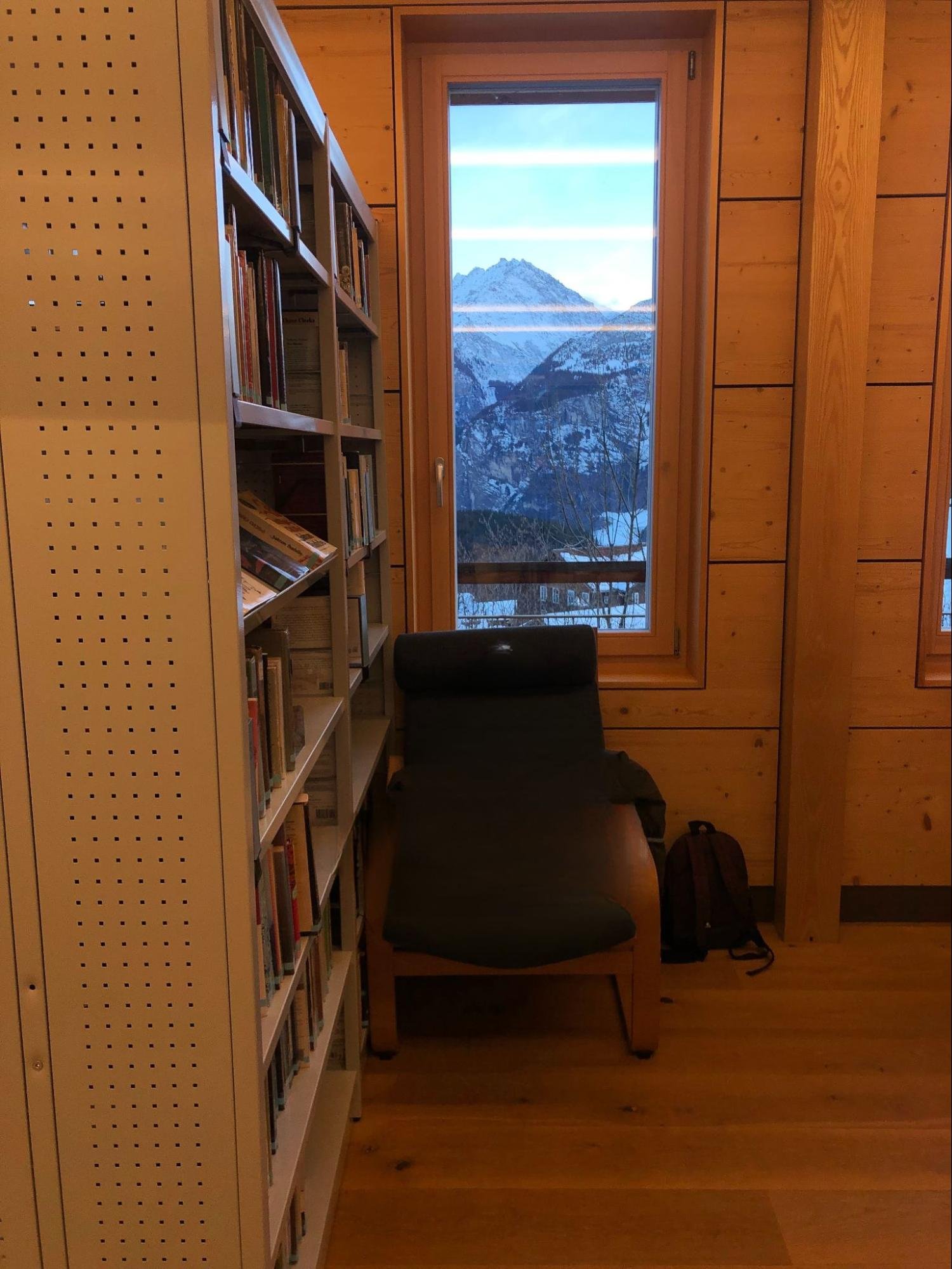
The library – our favourite place.
The Ecole is a place
where people feel at home.
Is it good or is it bad?
Who could ever know??
A lot is going on,
and it is all the time.
Inside this cozy little bubble,
between the locals, between the Alps.
Lunch is great.
The dinner – not that much.
But this is what we say:
We love the library.
We love it very much.
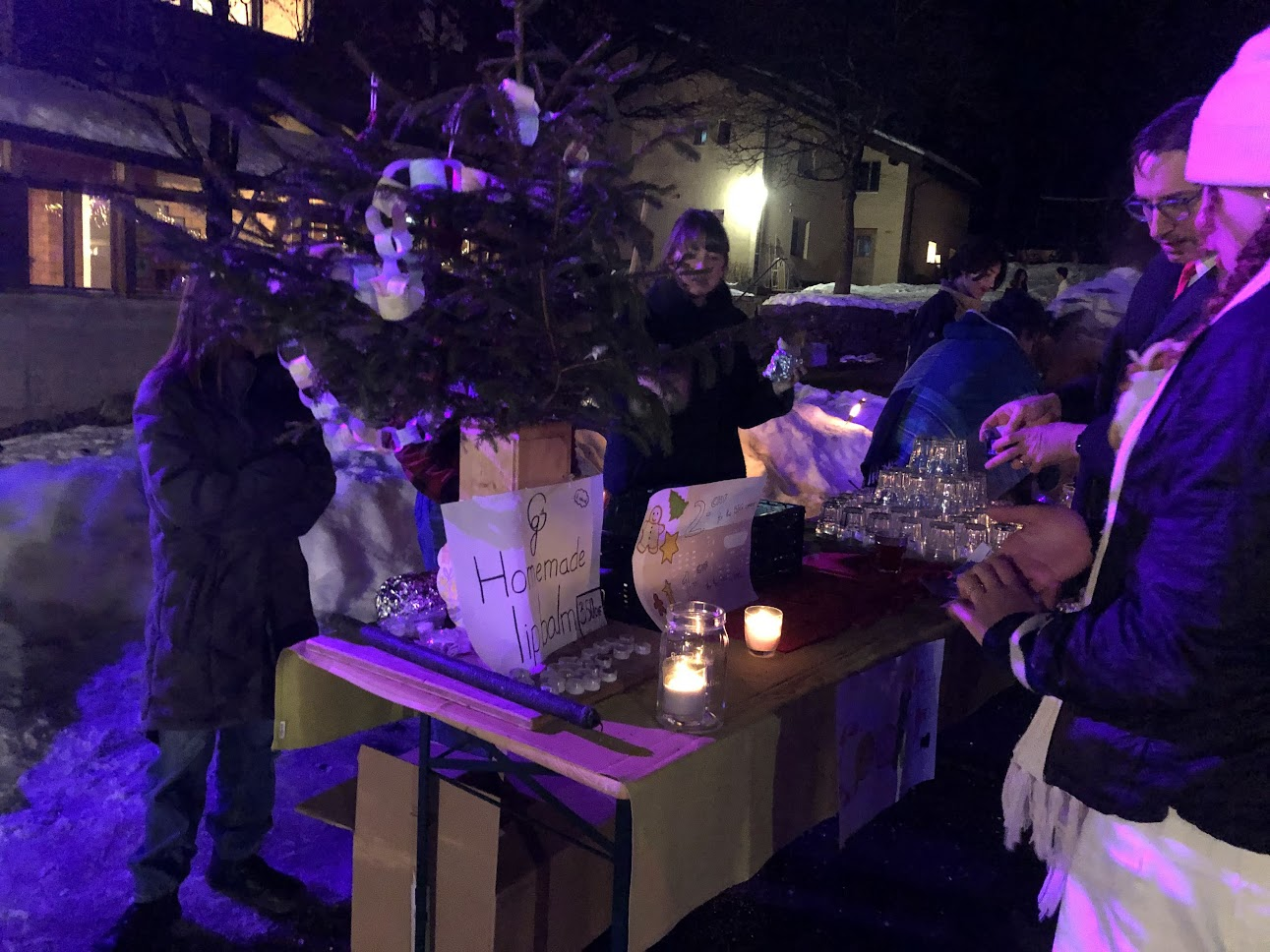
My daughter is selling (for the very first time ever) the lip balms she prepared at home especially for the Christmas market at Ecole – chocolate, vanilla, and lavender flavours. She earned 28 CHF, bought hot soup for 4 CHF, and donated 10 CHF to Ecole’s sister school in India.
Local people
We were so inspired by Ecole that we could see only good things about it. This was suspicious enough, so I spent some time walking between Hasliberg’s Wasserwendi, Goldern, and Reuti to find some local people who would tell me some bad things about Ecole. As stated in the poem, Ecole is a bubble. And usually, local people don’t like bubbles around.
It turned out that this was not the case. I met one of the most local families – the Thöni family. Their ancestors settled in Hasliberg 500 years ago. They confirmed that Ecole is a good place and that we should not worry about moving there with the whole family, since it is so good that our daughter won’t need support for longer than a month.
“Admittedly the Ecole is a world in itself, but we do not think this "bubble" is suspicious. Generally speaking, we don't think most of the locals would have a negative feeling about the Ecole, since the school makes great efforts to reach out to the neighbors & the farmers, often helping out on a local basis.”
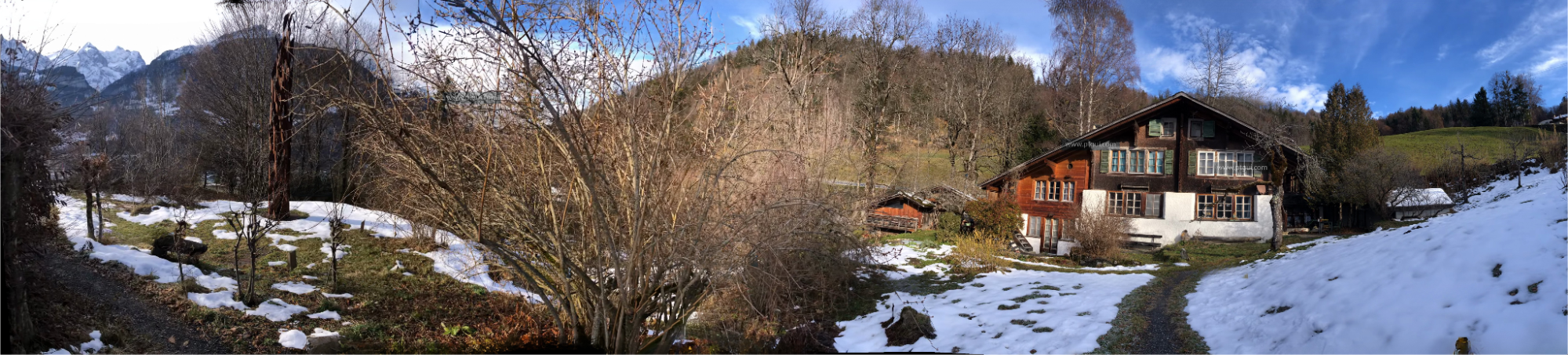
The off-grid house of H. P. and M. Thöni, full of Hasliberg stories, can be seen from the Reuti–Meiringen gondola while a wild goat is running around.
Learning in action
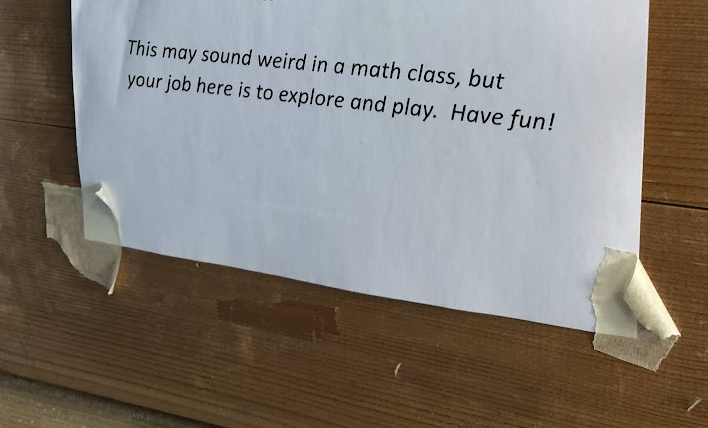
Part of a poster in the math classroom. I hope that someday people will find it weird if there is no play and exploration in a math class.
The word “school” (école) comes from the Greek scholé, meaning “leisure” or “spare time,” which evolved to describe activities done during that free time, like learning and philosophical discussion, and eventually the place where learning happened.
On the contrary, at Ecole we were learning all the time, not only in our spare time. It was interesting, and we actually learned things. I can say that it was interesting judging by my daughter’s reaction after her social science classes. For almost an hour on the train on our way back, she stepped into Feliciano's shoes (the social science teacher), explaining to me the evolution of trust through a game simulation (https://ncase.me/trust/).The real proof that she had learned something came in the following weeks. My daughter and I were talking about the uniforms in her current school in Bulgaria. I asked about her opinion on their purpose. She explained it to me through Robert K. Merton’s functional analysis, which she learned in Feliciano’s social science class. I was pleasantly surprised – she learned something at Ecole during a period of high information load and was able to apply it in another context, for a better understanding of the dynamics at her current school.I would also like to mention that the song we heard during the singing ensemble with Alessandro became the most popular song of our Christmas family choir.
What Matters Most: The Choice Itself
It would be impolite not to mention the view and the nature.
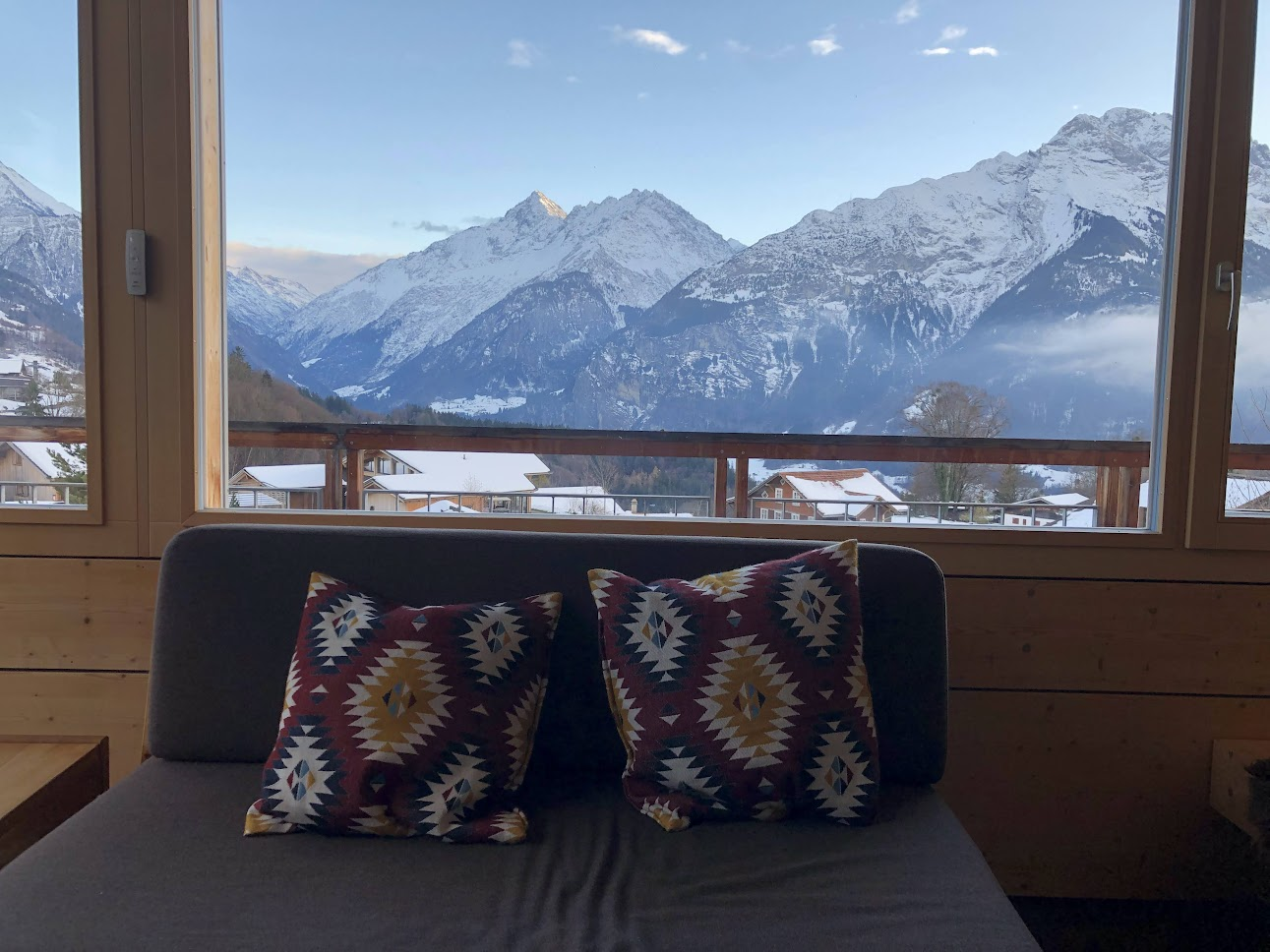
In the meeting room next to the library.
Yet it is not the view and nature, with their blueberries and snow, that matter most to us. It is not even the quality of the learning, remarkable as it is. For a long time, I would have said that it is the community: people from all over the world who support the school, alumni who buy houses nearby years after graduation, teachers who return 55 years later and speak about Ecole with warmth coming from the heart.
After yet another round of editing, however, I realize that what matters most to us is the choice itself. It is the fact that we are able to evaluate alternatives, to take the long view, and to make our own decision. It is about giving our child the opportunity to choose the place where she will spend her high school years. When, at the end of our trip, my daughter said, “This is the school I want to be in,” I felt deeply thankful to the whole community for sustaining such an alternative—one in which children are trusted to choose.
Thank you!